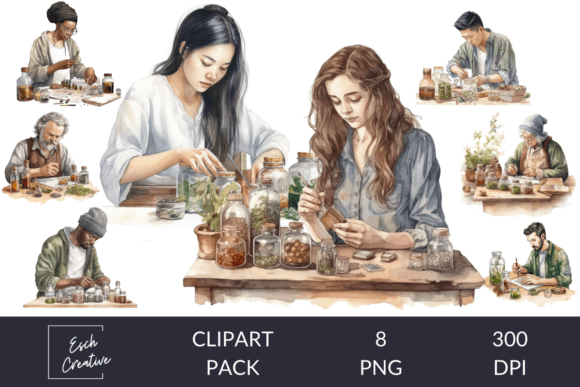
Herbalist Crafting Watercolor Clipart: A Fresh Visual Asset for Lifestyle & Wellness Branding
First Impressions: Soft, Organic, and Intuitively Approachable
Opening the Herbalist Crafting Watercolor Clipart bundle, the first thing that stands out is its hand-painted texture and muted color palette. It immediately evokes a sense of calm, creativity, and craftsmanship. This design asset feels perfectly suited for wellness brands, herbal product packaging, and content creators focused on nature, self-care, or artisanal goods. The watercolor style adds a touch of authenticity and warmth that can help build immediate emotional connection with audiences seeking organic, handmade, or small-batch experiences.
Setting the Tone: Emotional Resonance for Brand Communication
From a brand designer’s perspective, emotional tone matters as much as visual consistency. Herbalist Crafting Watercolor Clipart leans into a soft, earthy, and slightly nostalgic aesthetic. This makes it ideal for businesses that want to communicate care, intentionality, and natural ingredients. Whether you're launching a new line of herbal teas or promoting a seasonal self-care challenge, these illustrations can subtly reinforce your brand's values without overpowering your message.
Real-World Marketing Use: Building a Cohesive Visual Language
Let’s imagine a small herbal wellness brand preparing for a summer product launch. They need a consistent visual language across packaging inserts, social media graphics, and email banners. Herbalist Crafting Watercolor Clipart offers a versatile base. The illustrations can be used as decorative elements in product labels, as background motifs in Instagram posts, or as visual accents in lead magnets like herbal recipe guides. The handcrafted look adds a human touch that aligns well with the brand’s messaging of natural wellness and mindful living.
Brand Identity Integration: From Logo Design to Packaging Design
When integrating Herbalist Crafting Watercolor Clipart into a brand identity system, the key is subtlety and balance. These illustrations work best as supporting elements rather than focal points. For example, in logo design, they can be used as secondary icons or watermark textures. In packaging design, they can serve as subtle accents on tea boxes or botanical cards. The SVG and PNG formats make them easy to scale and layer with other design assets, ensuring visual consistency across print and digital touchpoints.
Social Media Graphics: Elevating Pinterest and Instagram Aesthetics
For content creators and social media managers, this graphic design asset is a goldmine. The watercolor textures and botanical themes are highly shareable, especially on Pinterest. When used in Canva templates or pre-designed Instagram post kits, they create a polished yet approachable look. The soft edges and flowing lines help guide the viewer’s eye naturally, supporting a clear visual hierarchy without looking cluttered. They also pair beautifully with serif or script fonts, reinforcing a premium yet personal brand voice.
Email Marketing and Lead Magnets: Making Visual Content Stand Out
Email banners and lead magnet designs often get overlooked in terms of visual impact, but they shouldn’t. Herbalist Crafting Watercolor Clipart can be used to add visual warmth to email headers or as decorative dividers in downloadable guides. These illustrations help create a more engaging and memorable reading experience. Just be sure to test the file sizes and ensure readability on mobile, especially if you're embedding them into HTML emails or embedded PDFs.
Where This Design Asset Works Best
- Hero graphics for wellness blogs or product landing pages
- Campaign headers on Instagram and Facebook
- Product launch visuals for herbal or natural product brands
- Branded Canva templates shared with email subscribers
- Packaging accents on eco-friendly product inserts
- Promotional banners for seasonal wellness campaigns
Where to Use It Carefully
- Formal corporate branding where a clean, modern look is needed
- Dense information layouts where visual clarity is critical
- Small mobile graphics where detail might be lost
- Low-contrast backgrounds that reduce legibility
- Text-heavy ads where the illustration competes with copy
Practical Designer Notes: What to Test Before Launching
Before integrating Herbalist Crafting Watercolor Clipart into a live campaign, it's essential to test it in context. Try placing the illustrations inside your brand’s color scheme to see how they interact with your primary hues. Preview them in black and white to ensure they still communicate the intended mood. Place them into real mockups—like social media templates or packaging samples—to evaluate visual balance and hierarchy. And don’t forget to check how they scale on mobile screens, especially if they’ll be used in digital ads or email headers.
Font Pairing: Finding the Right Typographic Harmony
One of the most overlooked aspects of design is how illustrations work with typography. Herbalist Crafting Watercolor Clipart pairs beautifully with script and handwritten fonts, enhancing the artisanal feel. However, for better readability in marketing materials, consider using them alongside clean sans serif fonts for headings or modern serif fonts for body copy. This contrast helps maintain visual interest while ensuring your message remains clear and scannable.
Licensing and Usage: Confirming Commercial Rights
As a content marketer, I always double-check licensing before using any design asset in a commercial context. Herbalist Crafting Watercolor Clipart typically comes with a commercial license, but it’s important to verify the terms—especially if you're using the illustrations in client work, paid campaigns, or digital products sold on creative marketplaces. Always keep a copy of the license agreement for your records.
Final Thoughts: A Strong Design Asset for Purpose-Driven Brands
Overall, Herbalist Crafting Watercolor Clipart is a well-crafted, emotionally resonant design bundle that can elevate the visual storytelling of wellness, herbal, and lifestyle brands. It supports stronger first impressions, clearer visual hierarchy, and more consistent branding across marketing materials. While it may not be suitable for every design context, it shines in content creation, social media branding, and editorial layouts where warmth, authenticity, and creativity are key. For small businesses, online coaches, and product creators looking to build a more human-centered brand presence, this clipart set is definitely worth considering.